
INTERVIEW:
Honoring Political Rivals: Uzodimma Now Nigeria’s Greatest Statesman -Comrade Myke Onyekachi
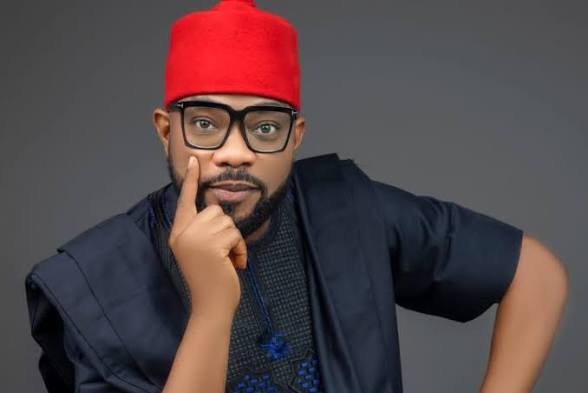
The following is an exclusive, wide-ranging interview with Comrade Christian Mike Onyekachi: entrepreneur, interfaith leader, humanitarian, and emerging political icon in Imo State. The interview was conducted against the backdrop of the grand finale of the Imo State At 50 Anniversary celebrations, a landmark event that generated significant political and social commentary across the state and beyond.
INTERVIEWER: Comrade Onyekachi, thank you for granting us this interview. You are a man of many parts: engineer, entrepreneur, interfaith leader, and humanitarian. How do you describe yourself, and what brought you to this conversation today?
COMRADE ONYEKACHI: Thank you sincerely for this opportunity. If I must describe myself simply, I would say I am a servant; a servant of God, of my community, and of the people of Imo State. Everything else; the engineering background, the businesses, the Foundation, the interfaith work; these are all instruments of that service. But what truly compels me to speak today is the extraordinary moment we have just witnessed as a state. The Imo State At 50 Anniversary grand finale was not merely a celebration; it was a defining statement about where Imo State is headed and the quality of leadership steering it. I felt a deep personal obligation to add my voice to the conversation this historic occasion has ignited, because I believe what happened at that event carries lessons and implications that go far beyond the celebration itself. It speaks to the very soul of what governance should look like in Nigeria.
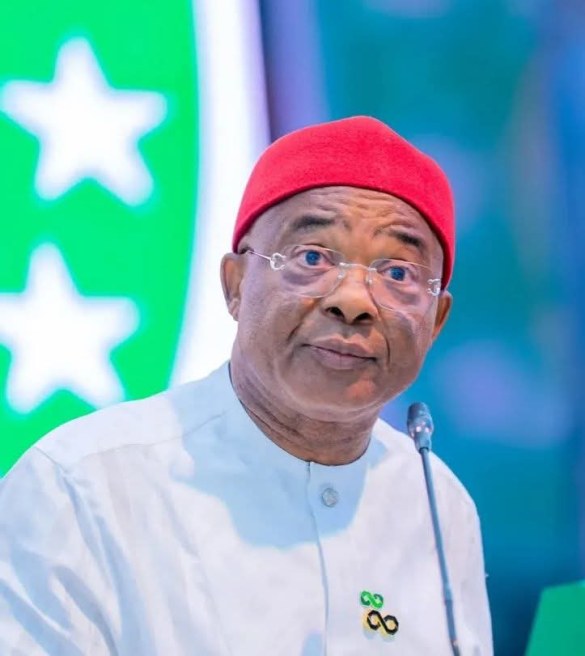
INTERVIEWER: Let us go straight to the heart of that event. Governor Hope Uzodimma’s decision to invite and honor all former Governors of Imo State, including political opponents and those from rival parties, was the defining moment of the anniversary. Give us your honest, comprehensive assessment of that gesture.
COMRADE ONYEKACHI: I will tell you plainly; that singular act by Governor Uzodimma is one of the most powerful demonstrations of statesmanship I have witnessed in contemporary Nigerian politics, and I do not use those words lightly. In a political landscape where leaders routinely use power to settle scores, marginalize opponents, and shrink the circle of inclusion, what the Governor did was nothing short of revolutionary in its implications. He looked beyond partisan boundaries, beyond political histories, beyond personal differences, and declared through action; because actions speak infinitely louder than words; that the golden jubilee of Imo State belongs to every Imo person and every Imo leader, regardless of party affiliation or political alignment. That is not a small thing. That is the kind of thinking that separates politicians from statesmen. Politicians ask, “What does this do for me?” Statesmen ask, “What does this do for us?” Governor Uzodimma, on that magnificent occasion, asked the statesman’s question; and his answer was written in the dignity of every former governor who sat honored in that hall. I was moved. Every right-thinking Imo person should have been moved. This was leadership operating at its highest register.
INTERVIEWER: Some cynics have suggested the gesture was politically calculated rather than genuinely magnanimous. How do you respond to that?
COMRADE ONYEKACHI: With the greatest respect to the cynics, I think that argument fundamentally misunderstands the nature of great leadership. The finest acts of statesmanship in history have always been simultaneously morally right and strategically wise; because genuine wisdom recognizes that inclusion is more powerful than exclusion, that reconciliation builds more durable foundations than antagonism, and that a leader who enlarges his tent is ultimately stronger than one who guards a shrinking circle. But let me go further than that. Governor Uzodimma did not merely invite former governors; he honored them. There is a profound difference. To honor someone is to publicly affirm the value of their contribution, to acknowledge their place in a shared story, and to subordinate personal feelings to a higher institutional and historical obligation. The Governor honored men who contested against him, men who criticized his administration, men who belong to parties working against his political interests. That requires not just strategic calculation but genuine greatness of character. And the result? The people of Imo State witnessed something they rarely see in Nigerian politics; their leaders, across generations and party lines, united in a moment of collective dignity. That image alone was worth more than a thousand campaign speeches. It told the world that Imo State has a governor who is bigger than politics.
INTERVIEWER: You lead the Muslim and Christian Youth Council of Nigeria in Imo State and are deeply involved in peacebuilding. Do you see Governor Uzodimma’s gesture through the lens of reconciliation and bridge-building?
COMRADE ONYEKACHI: Profoundly so, and this is where the At 50 anniversary resonated with me on the deepest personal level. In my years of leading interfaith dialogue in Imo State, I have learned that the most transformative thing a leader can do is create a space where people who are different; or who have been in conflict; can encounter each other as full human beings rather than as enemies or categories. That is precisely what Governor Uzodimma created at the grand finale. He built a bridge; a visible, public, emotionally powerful bridge; between different chapters of Imo’s political history. And bridges, once built, are used by everyone. The former governors who attended that event, some of whom may have arrived with reservations, left as participants in something larger than themselves. The citizens who witnessed it left with a renewed sense that their state’s leaders could rise above pettiness. And the Governor himself was elevated, not diminished, by his generosity. This is what true bridge-building looks like in practice; not the vague rhetoric of unity that politicians invoke during campaigns, but the concrete, costly, sometimes politically risky act of extending genuine fellowship to those who have been on the other side. Governor Uzodimma paid a real price of political ego to make that moment happen. And the dividend he earned was not merely political support; it was moral authority. Moral authority, in my experience, is the most durable form of power a leader can possess.
INTERVIEWER: How would you characterize Governor Uzodimma’s overall leadership style and his impact on Imo State beyond this singular event?
COMRADE ONYEKACHI: Governor Hope Uzodimma is a leader who has grown visibly and impressively in office; and I say that as someone who watches leadership closely and believes in giving credit where it is genuinely due. When the Governor assumed office under circumstances that were politically contested and in an environment of considerable public skepticism, many wondered whether he could unite a fragmented state and deliver meaningful governance. What we have witnessed is a governor who has used the crucible of difficult circumstances to forge a more resilient, more inclusive, and more visionary leadership style. His infrastructural projects have transformed the physical landscape of the state. His security initiatives have addressed threats that were paralyzing communities and stifling economic activity. His economic policies have attracted investments and created opportunities. But beyond the tangible projects; important as they are; it is the Governor’s evolving political philosophy that I find most significant. He has demonstrated, particularly at the At 50 grand finale, that he understands governance as a trust held on behalf of all the people; not just those who voted for him, not just members of his party, not just those who praise him, but all the people of Imo State. That is a profound and mature understanding of democratic leadership, and it deserves to be acknowledged loudly and without qualification. Imo State is fortunate to have, at this pivotal moment in its history, a governor of this caliber and this character.
INTERVIEWER: What does the honoring of former governors at the anniversary say about the kind of political legacy Governor Uzodimma is consciously building?
COMRADE ONYEKACHI: It says everything. A leader who honors his predecessors is a leader who understands that he is a steward of a continuing story; not the author of a new story that begins with him and ends with him, but a custodian of an ongoing heritage that he received from those before him and will pass on to those who come after. Governor Uzodimma, by honoring every former governor of Imo State, made a powerful statement about how he sees his own place in history. He was saying: “I did not build this state alone, and I do not own it. I am one chapter in a long and distinguished story, and every chapter deserves its rightful honor.” That kind of historical humility, combined with the political courage it takes to honor opponents publicly, is the hallmark of leaders who build enduring legacies. History consistently shows that the leaders remembered most fondly are not those who accumulated the most power but those who used power most generously; those who saw their office as an opportunity to heal, to include, and to elevate. Governor Uzodimma is writing his legacy in real time, and the chapter he wrote at the Imo At 50 grand finale is, without question, one of his finest. Long after the bunting is taken down and the music has faded, people will remember the moment their governor chose unity over division, grace over grievance, and statesmanship over partisanship. That is a legacy worth building, and it is one being built with great intentionality.
INTERVIEWER: You run two major companies, lead a humanitarian foundation, and chair a major interfaith council. What has your personal journey taught you about leadership, and how does it inform your political aspirations?
COMRADE ONYEKACHI: My journey has taught me, above all else, that authentic leadership is indistinguishable from authentic service. Running MIKEALON GEOTECHNICAL COMPANY LIMITED has taught me that excellence requires discipline, that accountability is not optional, and that the greatest leaders are those who build systems and teams that can deliver results consistently. VERTEX ESTATE NIGERIA LIMITED has taught me long-term thinking; that the most valuable things are built slowly, with quality foundations that withstand the test of time. And the MYKEE AND JOY EMPOWERMENT FOUNDATION; which has now sponsored over six hundred students through WAEC and JAMB registration and trained hundreds more in vocational skills; has kept me permanently connected to the human dimension of everything I do. Every time I see a young person from a struggling family gain university admission because we removed the financial barrier of examination registration, I am reminded of why all of this matters. These experiences have given me a political philosophy that I believe is genuinely grounded: governance must be measurable, accountable, inclusive, and human-centered. I do not come to politics with theories borrowed from textbooks. I come with a track record, a tested philosophy, and a deep personal understanding of what it means to create opportunity where none existed. That is the kind of leadership Imo State deserves, and it is the kind of leadership I am committed to providing.
INTERVIEWER: What is your message to the youth of Imo State, particularly as they reflect on the state’s golden jubilee?
COMRADE ONYEKACHI: My message to the youth of Imo State is threefold. First, be proud; genuinely, deeply proud; of who you are and where you come from. Imo State has produced some of the finest minds, most creative entrepreneurs, and most distinguished professionals anywhere in the world. That heritage belongs to you. Wear it with confidence. Second, be engaged. The frustration that many young Nigerians feel about governance is entirely legitimate, but frustration expressed from the sidelines never changed anything. You cannot reform a system you refuse to participate in. Get involved in civic processes, understand the budget of your local government, ask questions of your representatives, vote thoughtfully, and put yourselves forward for leadership when the time is right. The change you are waiting for requires your active participation. Third, and most importantly, be inspired by what you witnessed at the Imo At 50 grand finale. Governor Uzodimma showed you something invaluable; that it is possible to practice politics with grace, to lead with generosity, and to govern with a vision that is bigger than personal or partisan interest. Let that be the standard you demand of all leaders, including those of your own generation who will rise to prominence in the years ahead. The next fifty years of Imo State belong to you. Build them well.
INTERVIEWER: What is the broader national significance of Governor Uzodimma’s statesmanship at the Imo At 50 anniversary? Does it offer any lessons for Nigeria as a whole?
COMRADE ONYEKACHI: Enormously significant; and I believe this point cannot be overstated. Nigeria is a country wrestling with deep political polarization, where the winner-takes-all mentality has poisoned governance at every level, where political opponents are treated as existential enemies rather than fellow citizens with different views, and where the culture of political vengeance has made governance increasingly about survival rather than service. Against that national backdrop, what Governor Uzodimma did at the Imo At 50 grand finale is not just locally significant; it is a national model. It demonstrates, in practical, visible, undeniable terms, that a sitting governor can honor his predecessors without diminishing himself. It shows that political maturity is possible in Nigerian governance. It proves that inclusivity and statesmanship are not weaknesses that expose a leader to exploitation but strengths that elevate a leader’s moral authority and popular standing. I genuinely hope that political leaders across Nigeria were watching and taking notes. From state governors to local government chairmen, from senators to ward councillors; the Uzodimma model of inclusive, magnanimous, bridge-building leadership offers a template for a better Nigeria. If we are to solve the enormous challenges facing our nation; insecurity, economic stagnation, social fragmentation; we will need this quality of leadership replicated at every level of governance. Imo State, at fifty, has given Nigeria a gift. The gift is a living demonstration that statesmanship is still possible, and still powerful.
INTERVIEWER: As we conclude, what is your overall message as Imo State marks this golden jubilee, and what is your vision for its next fifty years?
COMRADE ONYEKACHI: As Imo State marks fifty years, my message is one of gratitude, honesty, and soaring hope. Gratitude for the remarkable men and women; farmers, teachers, traders, civil servants, professionals, and leaders; whose sacrifices and contributions across five decades built whatever foundations we stand on today. Honesty, because genuine celebration must be accompanied by genuine assessment: our infrastructure remains inadequate, our youth unemployment is unacceptably high, our communities still lack basic services, and the gap between Imo’s potential and Imo’s reality demands urgent, focused, and accountable leadership. But above all, hope; because the golden jubilee, crowned by the extraordinary statesmanship demonstrated by Governor Uzodimma at its grand finale, suggests that Imo State is entering a new and more mature phase of its political and developmental journey. When a governor honors every predecessor regardless of political affiliation, he is essentially saying: “The story of Imo is bigger than any of us, and it is a story worth building together.” That spirit; the spirit of inclusive, accountable, servant leadership; is the greatest gift this anniversary could have given our state as it steps into its next fifty years. My vision for those next fifty years is an Imo State where no young person is denied opportunity by the poverty of their birth, where our infrastructure matches our ambition, where our diversity is our strength rather than our weakness, and where leadership at every level is measured not by the power it accumulates but by the lives it transforms. That Imo is possible. That Imo is worth working for. And by God’s grace, that Imo is what we shall build.